
Identifying coins of foreign origin requires relying on physical parameters and a foreign coin identifier, of course.
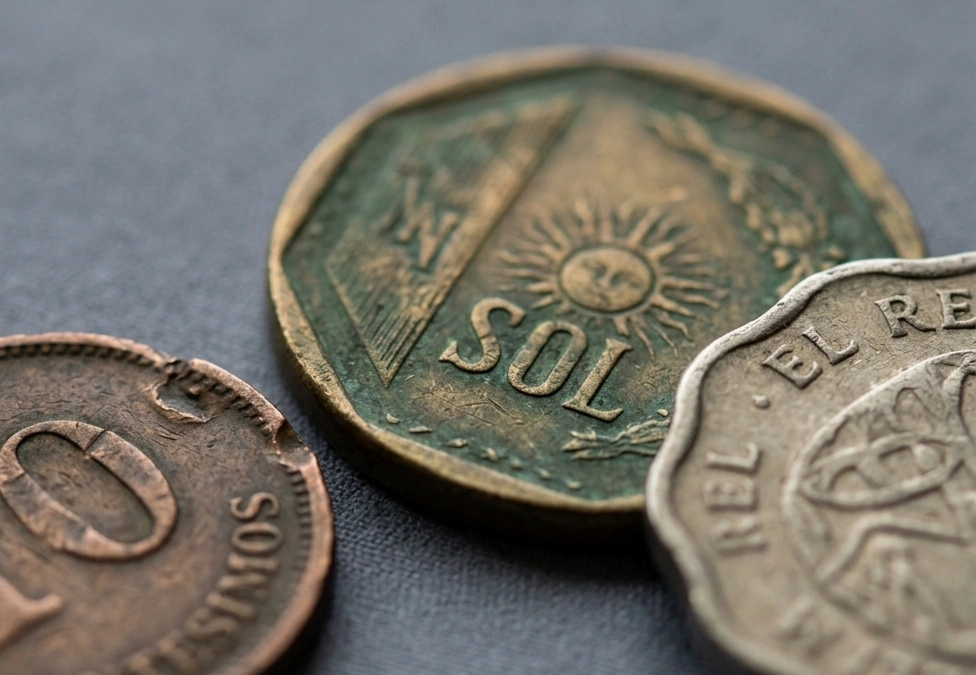
Textual legends on the obverse and reverse often suffer distortion during the manufacturing of copies.
Physical characteristics serve as the primary filter when determining authenticity.
Any deviation from the established norm indicates interference in the structure of the product.
Weight discrepancy → Signal for conducting deep analysis.
Each type of coin possesses a unique set of metrics.
Compliance with these parameters guarantees the liquidity of the asset in the international market.
| Coin Name | Material | Weight in grams | Diameter in millimeters |
| South African Krugerrand | Gold alloy | 33.93 g | 32.77 mm |
| American Eagle | Gold 917 fine | 33.93 g | 32.70 mm |
| Canadian Maple Leaf | Pure gold | 31.10 g | 30.00 mm |
| Austrian Philharmonics | Pure gold | 31.10 g | 37.00 mm |
| Chinese Panda | Gold 999 fine | 30.00 g | 32.00 mm |
Chinese manufacturers changed the weight standard in 2016.
Transitioning from the 31.10 gram system to 30.00 grams created a new niche for evaluation.
Density as a Factor for Excluding Counterfeits
Using cheap alloys changes the volume of the product while maintaining the weight.
Gold possesses a density of 19.3 g/cm³.
One heavy metal used in fakes has a similar density of 19.25 g/cm³.
A difference of 0.05 g/cm³ is detected using hydrostatic weighing.
Applying ultrasonic control allows for discovering voids inside the coin.
Presence of foreign inclusions → Price reduction to the value of scrap.
Edge Structure and Rim Design
Designing the edge of the coin remains the most difficult element for copying.
Mints use specific types of notches.
- Straight vertical reeding
- Slanted reeding at a specific angle
- Edge lettering using unique fonts
- Combined type of styling
Inconsistency in the number of notches compared to official data indicates non-original origin.
Distance between letters in the edge inscription must be identical across the entire batch.
Price Fluctuation Statistics on the 2023–2026 Market
Market value of coins demonstrates steady dynamics.
Price changes depend on macroeconomic indicators.
| Year | Gold Price Change | Silver Price Change |
| 2023 | +12.5% | +5.2% |
| 2024 | +15.8% | +8.1% |
| 2025 | +10.2% | +11.4% |
| 2026 (March) | +4.5% | +3.7% |
Average annual growth in the value of investment coins stands at 10.75%.
Premium to the exchange price of the metal varies from 3% to 15% depending on rarity.
Record Sales and Auction Indicators
Objects with exceptional characteristics reach maximum prices.
Condition of preservation on the Sheldon scale directly affects the final figure.
- 1933 Double Eagle (Weitzman specimen) → $18,872,250
- 1794 Silver Dollar (Flowing Hair) → $10,016,875
- 723 Gold Dinar → $4,700,000
Absence of wear traces on protruding parts of the relief raises the price by 40%.
Natural color changes on the surface increase the collector value by 25%.
Design Verification Methodology Through Microscopy
Studying die details with the coin identifier allows for identifying traces of casting.
Authentic minting leaves sharp boundaries between the field and the relief.
Signs of original production:
- Absence of microscopic bubbles on the surface
- Radial lines of mint luster
- Sharpness of small elements of the coat of arms or portrait
- Identity of the mint mark location
Using the laser scanning method confirms the geometry of the drawing.
Image displacement of more than 0.5 millimeters occurs extremely rarely.
Corrosion Influence on Weight Indicators
Oxidative processes change the mass of the product toward an increase.
Formation of salts on the surface of silver coins destroys the crystal lattice.
Reasons for value loss:
- Mechanical cleaning with abrasive substances → -50% of price
- Chemical exposure to acids → -30% of price
- Traces of soldering or mounting in jewelry → -70% of price
Preserving the original surface remains a mandatory condition for investment.
Natural changes in metal color are not considered a defect.
Percentage Ratio of Evaluation Factors
Experts distribute the significance of parameters in a specific proportion.
- Weight and density of material — 40%
- Design detailing and micro-relief — 30%
- Condition of preservation — 20%
- Rarity and mintage — 10%
Exact matching of all four points guarantees authenticity.
Minting Features in Different Regions
Technological capabilities of countries differ in complexity levels.
European mints apply a multi-level security system.
United Kingdom (Royal Mint)
Using hidden images changing when tilted.
Australia (Perth Mint)
High field polish combined with a matte relief.
USA (West Point)
Strict control of minting depth in portrait zones.
Applying micro-engraving technology excludes the possibility of manual copying.
Market Dynamics Depending on Metal Purity
Usage of coins made of 900 fine alloy has decreased in recent decades.
Market prefers pure metals of 999 fine.
Demand growth for pure gold → +18% per year.
Stability of demand for historical alloys → +4% per year.
Investors choose simplicity of melting and standardization.
Certification Process and Its Significance
Confirmation of characteristics by an independent laboratory fixes the coin condition.
Using hard plastic containers prevents damage.
Advantages of certified objects:
- Authenticity guarantee from an expert group
- Simplified resale procedure at international auctions
- Protection from environmental influence
- Transparency of ownership history
Cost of the evaluation procedure fluctuates from $30 to $150 per unit.
Presence of an identification number in the database allows for checking the coin remotely.
Correlation of Diameter and Thickness During Verification
Geometric parameters must correspond to the weight.
Increasing thickness while maintaining the diameter indicates low material density.
Verification Algorithm:
1. Diameter measurement with calipers at 0.01 mm precision
2. Thickness measurement at three different points of the rim
3. Data comparison with the official manual
Uneven thickness indicates the use of worn equipment.
Authentic coins have strict parallelism of the obverse and reverse planes.
Reasons for Decreased Interest in Copper Alloys
Copper is prone to rapid oxidation in high humidity conditions.
Storage cost exceeds the potential profit from metal growth.
Liquidity decrease for copper coins → -12% over the last two years.
Capital transition into precious segments is driven by storage compactness.
Weight of a gold coin at 31.10 grams equals several kilograms of copper in value.
Statistical Analysis of Counterfeits in the 2026 Market
Number of identified falsifications has grown in the silver investment coin segment.
Share of counterfeits in total turnover:
- Silver coins weighing 31.10 g — 8%
- Gold coins weighing 31.10 g — 3%
- Historical coins before 1900 — 15%
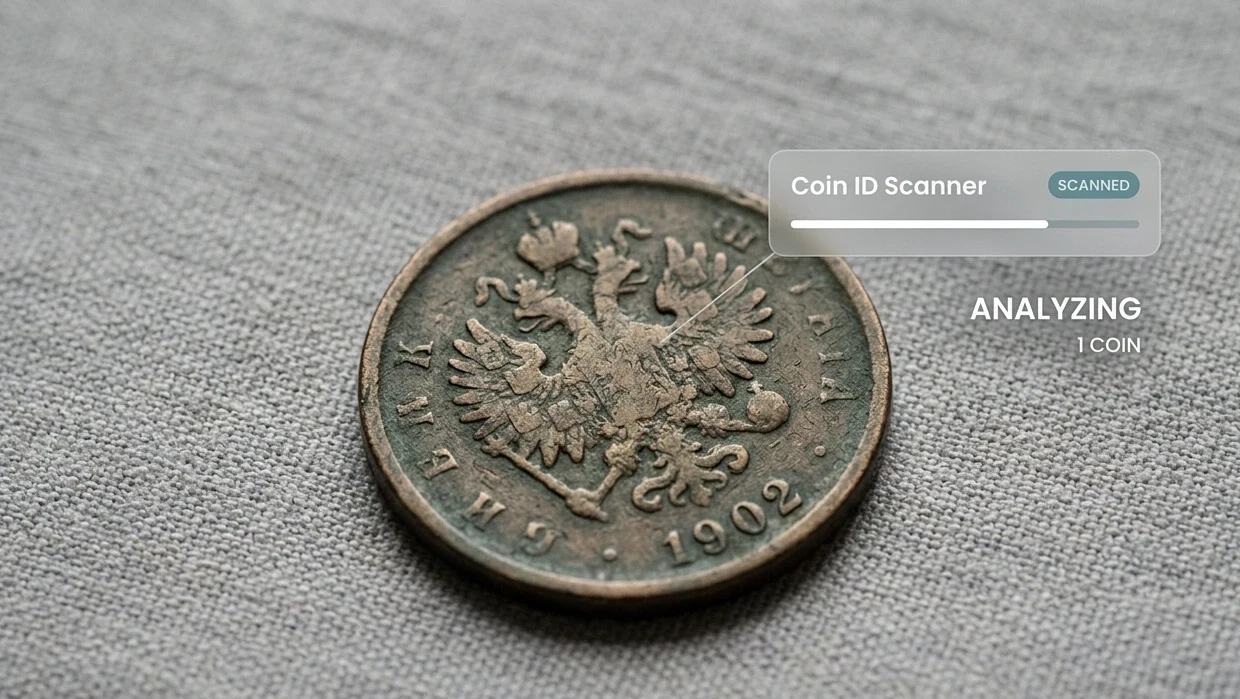
Rising quality of fakes requires the application of spectral analysis.Methods with the best coin identifier app free determine the exact chemical composition in 30 seconds.